2026-08-27 ·
Basement Flooding After an Iowa Storm: Your First 24 Hours Checklist
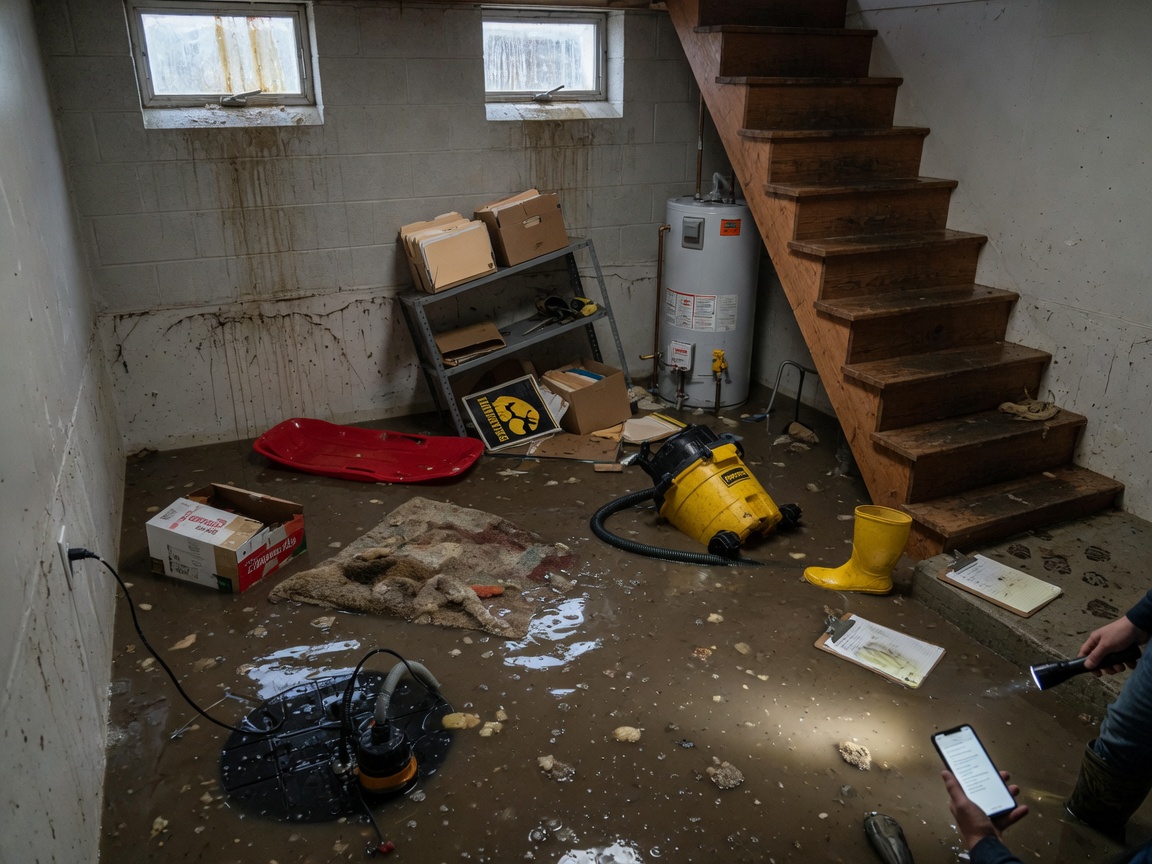
In the first 24 hours after basement flooding from an Iowa storm in Cedar Rapids, prioritize safety, stop additional water entry, extract standing water, begin drying, and document everything before mold sets in. Linn County’s humid continental climate brings sudden heavy rains that overwhelm older homes with stone foundations common in NewBo District and Southeast Cedar Rapids, while cold winters and freeze-thaw cycles can worsen cracks near the Cedar River.
Prioritize Safety and Identify the Water Source
Before any cleanup, shut off electricity to the affected area at the breaker panel if water reaches outlets or appliances. Standing water in basements along the Cedar River often mixes with sewage or lawn chemicals after storms, creating health risks that require gloves, boots, and respirators. Walk the perimeter of your property in neighborhoods like Northwest Cedar Rapids or near Hawkeye Downs to spot downspouts clogged with debris or grading that directs runoff toward foundation walls. In homes built before 1960, common in Czech Village, check sump pump discharge lines for ice blockages during cold snaps that send meltwater back inside. If the source appears tied to storm runoff rather than a burst pipe, note the time and weather details for later reference. DR Water Restoration remains open 24/7 to help assess these conditions safely when homeowners feel unsure about electrical hazards.
Extract Standing Water and Protect Belongings
Remove as much water as possible within the first six to eight hours using a wet vac or submersible pump rated for the volume present. In older Linn County homes with finished basements near the National Czech & Slovak Museum, lift furniture, rugs, and boxes onto concrete blocks or move them to upper levels before they absorb more moisture. Cardboard boxes and drywall can begin wicking water upward within hours, so cut away saturated base trim to inspect the wall cavity. Focus first on the lowest spots, typically near the foundation in Southeast Cedar Rapids properties where the terrain slopes toward the river. Avoid spreading contaminated water to unaffected rooms by isolating the space with plastic sheeting. Keep a running log of items removed and their condition to support any future claims.
Begin Drying and Monitor Humidity Levels
Once visible water is gone, set up air movers and dehumidifiers to pull moisture from joists, subfloors, and masonry. Structural drying and dehumidification prevents hidden mold growth that thrives in the region’s humid summers. Place moisture meters at multiple depths in wood framing and check readings every few hours; target levels below 15 percent before closing walls. In Marion or Iowa City homes with similar construction, owners often overlook the space behind cabinets where damp air lingers. Run equipment continuously for the full 24 hours, emptying dehumidifier tanks as needed. Proper airflow across wet surfaces reduces drying time from days to roughly 48-72 hours total when started promptly.
Document Damage and Plan Next Steps
Photograph every affected area from multiple angles with timestamps before any material is discarded. Note water depth on walls and the location of items moved. Homeowners in Downtown Cedar Rapids often find that quick documentation helps when discussing coverage for storm-related losses. Does homeowners insurance cover water damage in Iowa? A 2026 claims guide explains common policy language around surface water versus sudden pipe failures. If the flooding traces to repeated storm events, consider evaluating basement waterproofing options such as exterior grading corrections or interior French drains suited to local clay soils. Storm damage repair teams familiar with Cedar Rapids weather patterns can later inspect roof and window flashings that may have contributed to the inflow.
Reduce Future Risk After the Initial Response
After the immediate 24-hour window, redirect downspouts at least six feet from the foundation and clear gutters before the next heavy rain. In flood-prone zones near Brucemore or Grant Wood, adding a battery backup to sump pumps guards against power outages common during Iowa storms. Seal small foundation cracks with hydraulic cement and monitor humidity with a simple gauge year-round. Review the Cedar River flood season 2026 preparation guide for seasonal checklists tailored to Linn County conditions. Consistent attention to grading and drainage cuts the chance of repeat flooding in older neighborhoods where basements sit close to the water table.