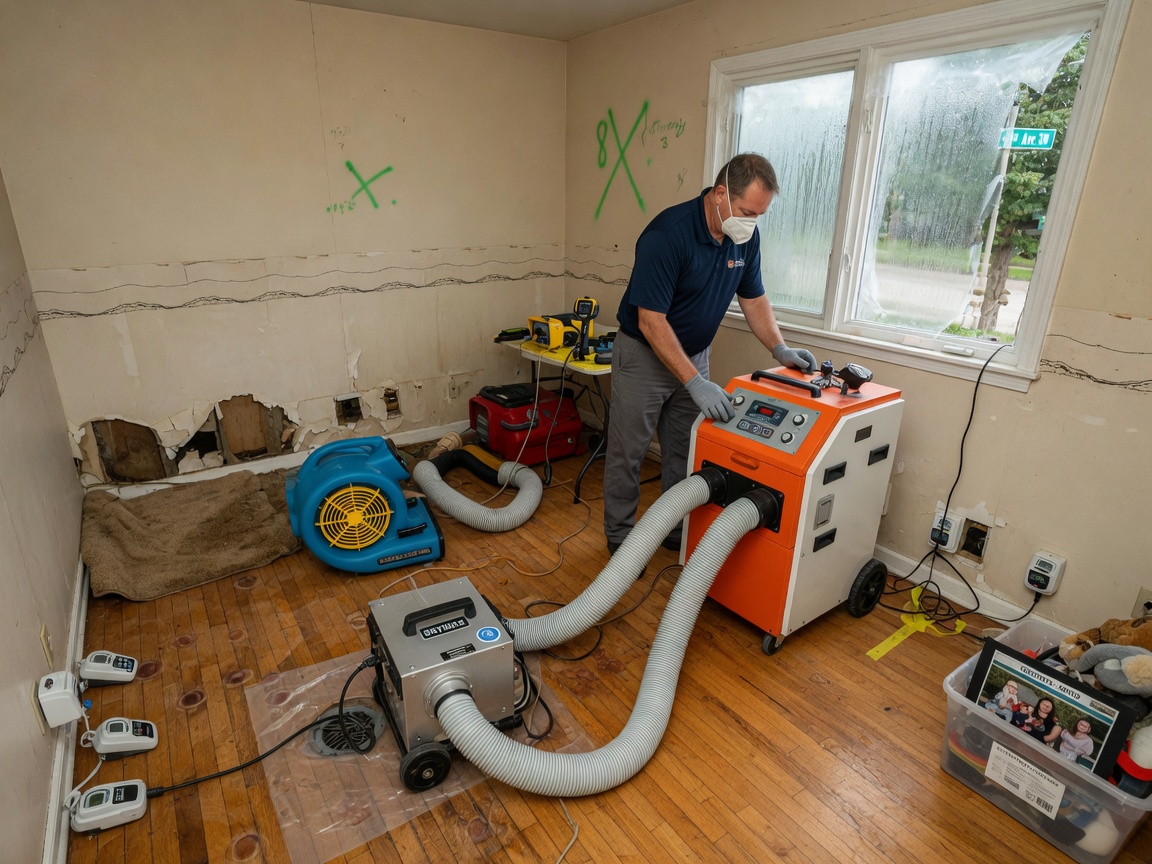
In Cedar Rapids homes built before 1960, especially those in Czech Village and the NewBo District, plaster and lath walls trap moisture far longer than modern drywall. After a pipe burst or sewer backup, we map moisture with meters and thermal imaging, then place air movers and dehumidifiers to pull water from cavities without tearing out intact surfaces. Cold winters slow evaporation rates while humid summers push relative humidity above 70 percent, extending drying times by several days compared to drier climates.
Flooding along the Cedar River often reaches basements in Downtown Cedar Rapids and Southeast Cedar Rapids where the water table sits high. We use low-grain refrigerant dehumidifiers rated for 150-plus pints per day and inject air into wall cavities to prevent mold growth behind baseboards. Skipping this step commonly leads to hidden rot that only shows up months later during a sale inspection.
Older brick and balloon-frame houses near Brucemore require slower drying to avoid cracking hardwood floors or warping trim. We monitor daily moisture readings and adjust equipment rather than running units at full blast. This approach protects original materials while still meeting the drying goals needed for insurance documentation.
Technician insight
In Cedar Rapids, the thing that catches most people out with Structural Drying & Dehumidification is how quickly moisture travels through balloon framing in pre-1950 homes around Czech Village and the NewBo District. One missed wall cavity during a cold snap and you will fight mold all winter.
Basement Drying After River Backup
Water from a Cedar River backup entered a 1920s home in Southeast Cedar Rapids. We found moisture behind plaster walls and under oak floors. Directed airflow and dehumidifiers ran for six days until readings stabilized. The owners avoided full wall removal and returned to normal use without further issues.
Structural Drying & Dehumidification Services We Offer
✓Moisture Mapping and Assessment
We locate hidden water in walls, floors, and ceilings using meters and imaging so drying targets only affected areas in Linn County homes.
✓Air Mover and Dehumidifier Placement
Strategic positioning of industrial fans and dehumidifiers removes moisture from structural cavities without over-drying unaffected rooms.
✓Wall Cavity Drying
Small access points allow directed airflow behind drywall and plaster to dry insulation and framing in older Cedar Rapids houses.
✓Hardwood Floor Drying
Controlled drying prevents cupping and cracking in original floors common in NewBo District and Czech Village properties.
✓Crawl Space Dehumidification
Sealed crawl spaces under Northwest Cedar Rapids homes receive targeted drying to stop moisture migration into living areas.
Structural Drying & Dehumidification Cost in Cedar Rapids, IA
| Service | Typical Range | What Affects It |
|---|---|---|
| Single room drying setup | $450–$850 | Increases with hardwood floors or plaster walls |
| Basement structural drying | $900–$1,800 | Higher when river flooding affects multiple properties |
| Whole-house drying after pipe burst | $1,400–$2,600 | Varies by home age and insulation type |
| Daily equipment rental extension | $150–$300 per day | Common in humid summer conditions |
Ranges are typical for Cedar Rapids, IA and confirmed with an exact written quote before any work starts.
How it works
- 1
Initial Assessment
We inspect the property, measure moisture levels, and identify all affected materials in the structure.
- 2
Equipment Setup
Air movers, dehumidifiers, and cavity drying tools are placed and calibrated for the specific home layout.
- 3
Daily Monitoring
Moisture readings are taken each day and equipment is adjusted until all structural materials reach dry standards.
- 4
Final Verification
We confirm drying goals are met and remove equipment, leaving the space ready for repairs.
Pricing
Pricing depends on square footage affected, number of rooms, and how long equipment must run.